
Agentic payments
AI agents are becoming economic actors.
Agentic payments allow an AI agent to initiate and complete transactions within authority delegated by a person or organization — governed by identity, mandates, and policy.
THE SHIFT
AI agents are becoming economic actors.
AI agents are beginning to do more than search, analyze, and recommend. They can increasingly act — and acting in the economy means moving money.
But today's payment infrastructure was designed primarily for humans and conventional applications.
What agents can already do
- Purchase software
- Book travel
- Procure services
- Manage subscriptions
- Buy infrastructure
- Negotiate with vendors
- Execute transactions
- Pay other autonomous systems
New questions before money moves
- Which agent is acting?
- Who does it represent?
- What is it allowed to buy?
- How much is it allowed to spend?
- Which merchants can it use?
- When does a human need to approve?
- Who is accountable for the transaction?
- Can its authority be revoked instantly?
PayHero provides the infrastructure to answer those questions before money moves.

DEFINITION
Payments designed for autonomous AI agents.
Agentic payments allow an AI agent to initiate and complete transactions within authority delegated by a person or organization.
Unlike conventional payments, agentic payments require more than access to a payment method. They require a trusted framework connecting six layers.
- IdentityWho is the agent?
- OwnershipWhich individual or organization does it represent?
- AuthorityWhat has the agent been authorized to do?
- PolicyDoes this specific transaction comply with the rules?
- PaymentCan money be moved securely?
- AccountabilityCan the complete decision and transaction be audited?
PayHero connects all six layers.
FLOW
From agent intent to authorized payment.
Agent initiates action
An AI agent determines that a purchase or payment is required.
Identity verified
PayHero identifies the agent and the organization it represents.
Mandate retrieved
The agent's delegated financial authority is loaded.
Policy evaluated
The proposed transaction is evaluated against relevant rules.
Approval determined
PayHero determines whether the transaction can proceed autonomously or requires human approval.
Payment authorized
The appropriate payment credential or payment rail is enabled.
Transaction executes
The merchant receives payment.
Audit record created
The complete decision and transaction history is recorded.
COMPARISON
Access is not authority.
A card issued to an agent grants access to money. A mandate grants authority to spend it, bounded and revocable. Traditional payments can record what happened; they cannot enforce what was allowed.
Traditional payment model
PayHero agentic payments
Card or account access
Agent identity
Human user
Delegated authority
Static credentials
Machine-readable mandates
Broad permissions
Granular policy
Manual governance
Real-time authorization
—
Human escalation
—
Instant revocation
Transaction record
Full decision audit trail
ADOPTION
Why businesses will adopt agentic payments.
24/7 economic execution
AI agents can transact whenever opportunities or operational requirements arise.
Machine-speed commerce
Reduce friction between decision and transaction.
Lower cost of operations
Automate repetitive purchasing and financial workflows.
More precise control
Instead of giving broad access to company payment methods, organizations can define granular authority.
Programmable governance
Translate financial policies into rules that systems can enforce automatically.
New business models
Enable agent-to-business and eventually agent-to-agent commerce.
CONTROLLED AUTONOMY
Autonomy without losing control.
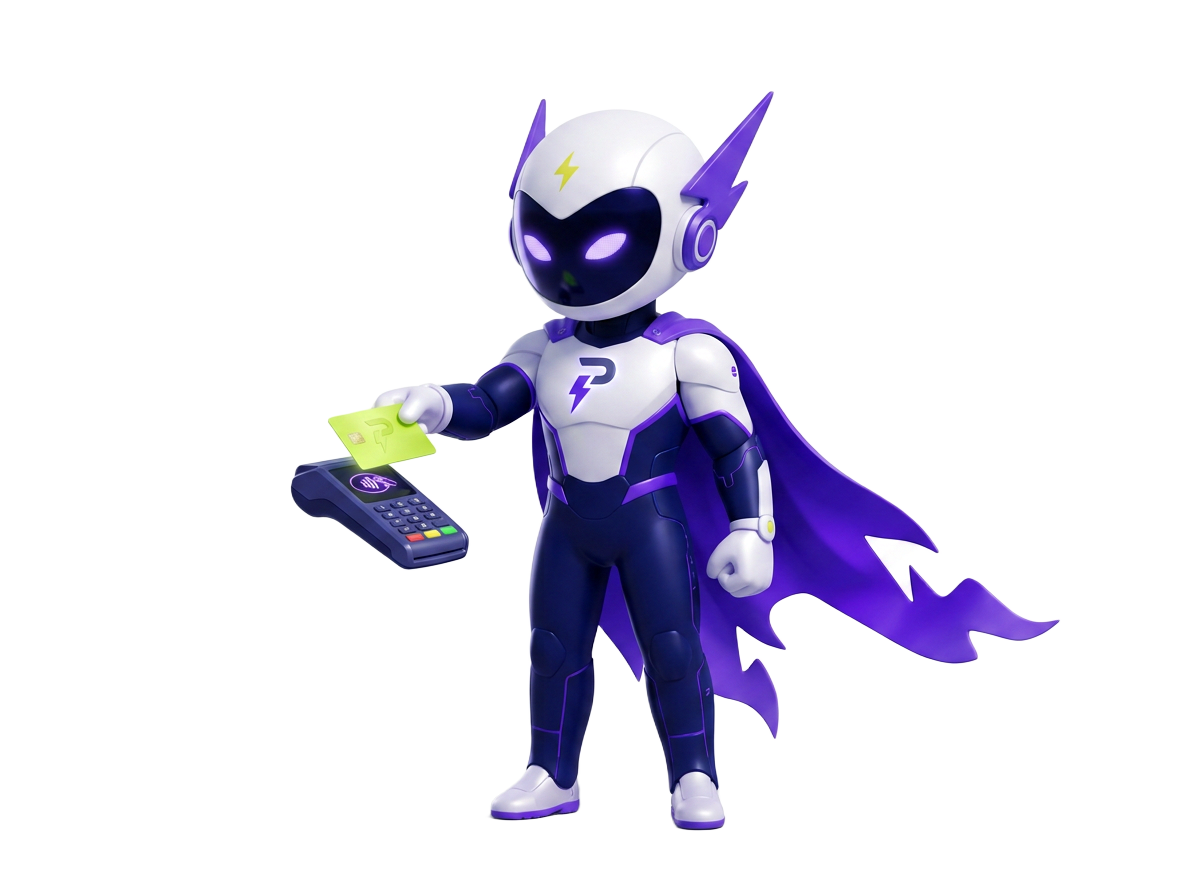
An agent should be able to act independently — but only inside clearly defined financial mandates, permissions, budgets, and policies.
Faster execution
Agents can complete routine economic actions instantly rather than waiting for manual workflows.
Lower operational overhead
Automate procurement, subscriptions, travel, purchasing, and other repetitive financial activities.
Controlled financial risk
Every agent operates inside predefined budgets, merchants, categories, and approval thresholds.
Complete accountability
Every transaction remains connected to an identity, mandate, policy decision, and audit trail.
VISION
The internet was built for humans to transact.The next economy will include AI agents.
AI agents will increasingly search, negotiate, purchase, subscribe, book, renew, and pay.
For that economy to scale, agents will need trusted infrastructure connecting their identity to the authority delegated by people and organizations.
Payments cannot simply be attached to an AI model.
- Identity
- Authority
- Policy
- Payment
- Accountability
PayHero is building that infrastructure layer.
GET STARTED
Prepare your business for autonomous commerce.
Give AI agents the financial authority they need — with the controls your organization requires.
- Agent
- Identity
- Mandate
- Policy
- Payment
- Merchant
- Audit